Blog
Europe's Fuel Crisis Relief Measures Now Affect Your Jet
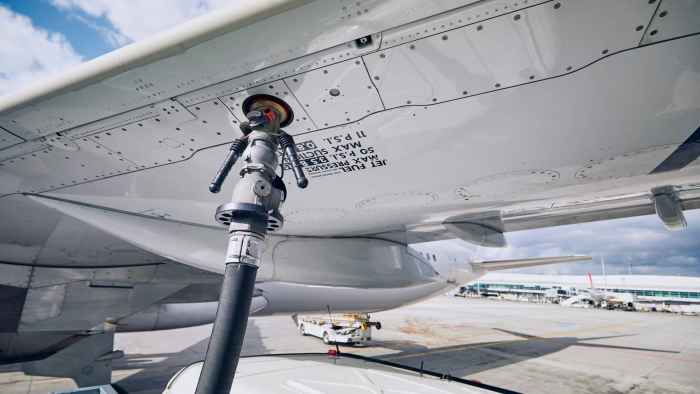
The conflict disrupting Middle East oil supply has continued since February 2026. Jet fuel remains expensive, but European regulators have introduced real relief measures for the charter companies caught in the squeeze. Here is what has actually changed, why jet fuel has been hit harder than crude oil itself, and what it means if you are chartering a flight in Europe.
Why jet fuel has become so volatile
The price gap between raw crude oil and refined jet fuel has widened sharply. It is now four to seven times its usual level, according to aviation consultancy IBA. Crude oil prices swung by as much as 20 dollars a barrel in early September 2026 alone, a sign of how unstable the market remains, with fresh volatility from renewed Houthi and Saudi clashes.
Jet fuel has been hit particularly hard because of how refining works. Jet fuel typically makes up only around a tenth of what a refinery produces from a barrel of crude, so when refining capacity is disrupted, refiners tend to prioritise higher volume products such as diesel and petrol, and jet fuel supply suffers disproportionately. The premium refiners charge for turning crude into jet fuel, known as the crack spread, jumped from a historical average of around 25 dollars a barrel to as much as 80 dollars a barrel during 2026, according to Daily Maverick.
The Strait of Hormuz, the narrow sea route most Gulf oil ships pass through, stays open but contested, with roughly 13 ships a day passing through, well below normal. At the low point in April 2026, the International Energy Agency's executive director warned publicly that Europe had roughly six weeks of jet fuel supply left, and energy company TotalEnergies cautioned that supply problems would follow if the disruption continued past June. Britain, Iceland, and the Netherlands were named as the most exposed markets at the time, with smaller and inland airports considered more vulnerable than major hubs.
The relief measures now in place
In response, EASA, the EU's air safety regulator, approved a safe workaround in May 2026. It lets operators use Jet A, the fuel grade standard in the United States, in place of Jet A-1, Europe's usual standard, when the usual grade runs short. The European Commission followed with its own guidance for charter operators. They can now skip the usual rule requiring most fuel to be bought at EU airports, if they can show their airport genuinely has none available. Price increases alone do not count, only real shortages do.
What this means if you are chartering a flight
For frequent flyers, these changes mostly bring reassurance rather than lower prices. Your operator may now be allowed to skip the usual EU fuel buying rule if their airport genuinely has none available, or to fly on Jet A rather than Jet A-1 if that is what is on hand. If a flight is cancelled over the shortage, they are also more likely to keep their usual take off and landing slot through March 2027, mirroring a similar step UK authorities took earlier in the year, when around 1,200 UK flights were cancelled between May and June 2026, under 1 percent of all flights scheduled in that window. Ask your operator whether either measure has affected your recent quotes.
None of this means the crisis is over. The conflict remains active and crude prices remain unpredictable, but EU officials are now checking supply every week rather than declaring victory, per CNBC. EU gas and energy officials note that European storage levels are lower than in previous years, though they describe the situation as considerably less severe than the crisis of 2021 and 2022, helped by more diversified sourcing and higher import capacity. What has changed is that Europe now has real backup measures in place, one reason the worst case forecast from spring has not yet happened. Staying in touch with your operator over the coming months remains the most useful thing you can do.
Sources
- EASA: Safe usage of jet aviation fuel in Europe
- European Commission: Gas Coordination Group, no immediate security of supply risk
- CNBC: Europe jet fuel shortage
- UK Government: Jet fuel and travel plans, what you need to know
- Euronews: Europe has six weeks of jet fuel left, IEA chief warns
- Daily Maverick: Why jet fuel and diesel are so vulnerable to price shocks
FAQ
Frequently asked questions.
Why has jet fuel become so expensive in Europe?
Ongoing conflict disrupting Middle East oil supply since February 2026 has widened the gap between raw crude and refined jet fuel to four to seven times its usual level, and because jet fuel is a smaller share of refinery output than diesel or petrol, it tends to suffer disproportionately when refining capacity is disrupted.
Is there a risk my flight will be cancelled due to fuel shortages?
Cancellations are possible if an airport genuinely runs short. Around 1,200 UK flights were cancelled for this reason between May and June 2026, under 1 percent of scheduled flights, but Europe now has real relief measures in place, and EU officials say fuel supply is not at immediate risk based on current stock levels as of September 2026.
What relief measures have European regulators introduced?
EASA approved a safe workaround in May 2026 allowing Jet A fuel to be used in place of the usual Jet A-1 standard when supply runs short, and the European Commission now allows charter operators to skip the rule requiring most fuel to be bought at EU airports if their airport genuinely has none available.
Will my flight keep its take off and landing slot if it is cancelled over a shortage?
Operators are now more likely to keep their usual slot through March 2027 if a flight is cancelled specifically because of the fuel shortage, similar to a step UK authorities took earlier in 2026.
Is the fuel crisis over?
No. The conflict remains active and crude prices remain unpredictable. EU officials are checking supply weekly rather than declaring the crisis resolved, though European storage levels, while lower than in past years, are described as considerably healthier than during the 2021 to 2022 energy crisis.