Blog
How High Do Private Jets Fly?
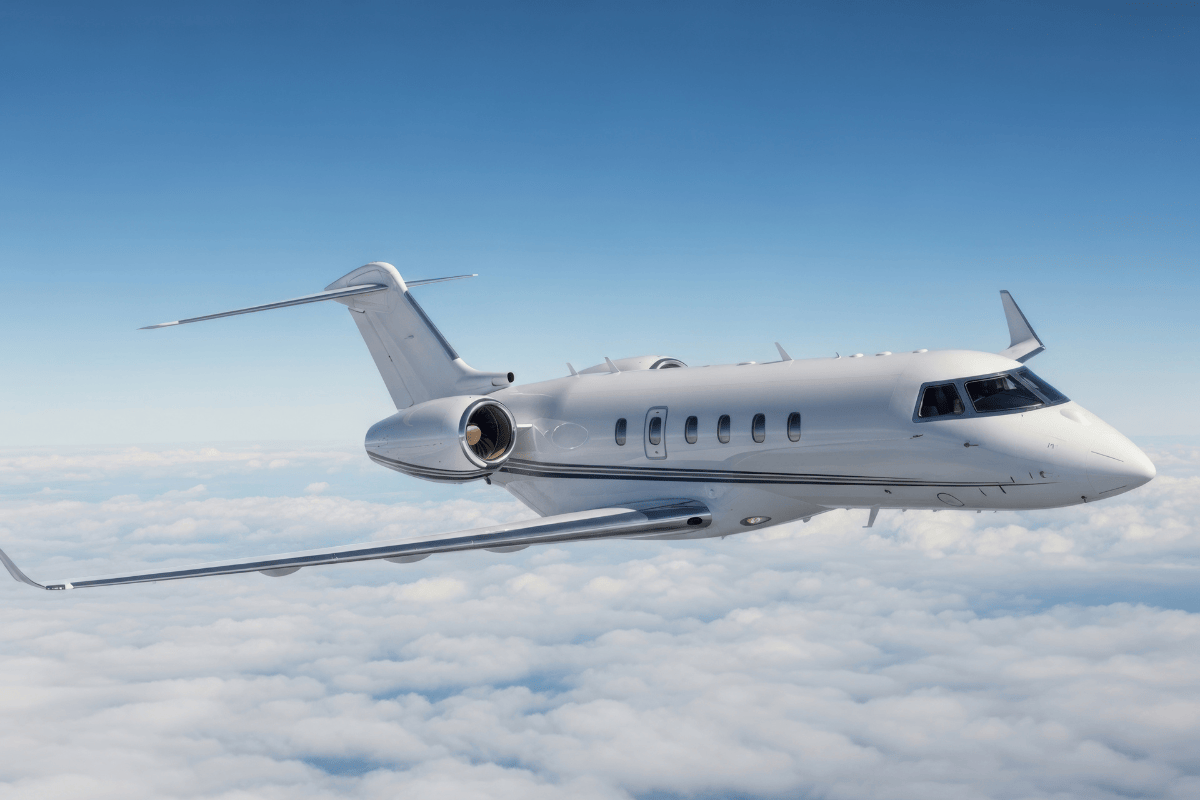
How high do private jets fly compared with the airliner taxiing next to them? Most private jets are certified to fly as high as 41,000 to 45,000 feet, with a handful of ultra long range jets certified up to 51,000 feet, several thousand feet above the 35,000 to 39,000 feet typical of a commercial airliner. This guide gives the real altitude figures by aircraft category, the air traffic rules behind them, and what the extra height actually changes for passengers.
What Altitude Do Private Jets Actually Fly At?
Pilots and air traffic controllers describe altitude in flight levels rather than plain feet. A flight level is written as FL followed by the altitude in hundreds of feet, so FL410 means 41,000 feet and FL510 means 51,000 feet. Most private jets have a maximum certified altitude between FL410 and FL450, with the longest range aircraft certified as high as FL510.
That certified figure is the aircraft's maximum operating altitude, not necessarily where it actually cruises on a given flight. Weight, route length, and air traffic control all affect the altitude an aircraft flies on the day. On a longer sector, a jet typically climbs in stages, called a step climb, moving to a higher altitude as fuel burns off and the aircraft gets lighter, since a lighter aircraft can sustain a higher cruise.
Private Jet Altitude by Aircraft Category
The table below gives the maximum certified altitude for one representative aircraft in each private jet category.
Very Light Jets: Up to 41,000 Feet
The Embraer Phenom 100 has a maximum altitude of 41,000 feet, according to Business Jet Traveler, with typical seating for five to six passengers and a cruise speed of up to 405 knots in its newer Phenom 100EV variant. This is the lowest ceiling of any category in this guide, though it still clears the typical cruising altitude of most commercial airliners.
Light Jets: Up to 45,000 Feet
The Cessna Citation CJ3 is certified to a maximum altitude of 45,000 feet, according to Business Jet Traveler, with typical seating for six passengers and a maximum cruise speed of 417 knots. That matches the midsize and super midsize jets further down this table, a useful reminder that altitude capability does not rise in a straight line with aircraft size or price.
Midsize Jets: Up to 45,000 Feet
The Cessna Citation Latitude has a maximum altitude of 45,000 feet, according to Jetcraft, with typical seating for nine passengers and a maximum cruise speed of 432 knots. Its bigger cabin and longer range come from a larger airframe, not a higher ceiling.
Super Midsize and Large Jets: Up to 45,000 Feet
The Bombardier Challenger 350 shares the same 45,000 foot maximum altitude as the Citation Latitude, according to Bombardier, with seating for up to 10 passengers and a top speed of Mach 0.83, faster than the light and midsize examples above. A private jet charter specialist can confirm which aircraft actually flies highest on a specific route, since a published maximum does not always match the altitude flown on the day.
Ultra Long Range Jets: Up to 51,000 Feet
The Gulfstream G650 and Bombardier Global 7500 both reach a maximum operating altitude of 51,000 feet, according to Aviation Week and its G650 overview. Gulfstream ended G650 production in February 2025, according to Aviation International News. At maximum takeoff weight, the Global 7500's initial cruise is limited to 43,000 feet, climbing higher only once enough fuel has burned off, according to the same source.
Private Jet Altitude vs Commercial Airliners
A typical widebody airliner such as the Boeing 777 cruises between 35,000 and 39,000 feet, with a certified maximum altitude of 43,100 feet, according to Flying Magazine. The Airbus A380 has a similar certified ceiling of 43,000 feet. Both figures sit below the maximum altitude of every private jet category in the table above except the lightest.
The Gulfstream G550, an older but still widely chartered ultra long range jet, is certified to 51,000 feet, around 8,000 feet higher than the 777's ceiling, according to the same source. In practice, this means a private jet can often fly in a layer of airspace entirely above the commercial traffic sharing the same route.
Engine and airframe limits are the main reasons for the gap. Jet engines lose thrust as the air thins with altitude, and Flying Magazine notes that altitude caps are set during flight testing to protect the airframe, engines and critical systems, and that as the air gets colder with altitude, engines can only tolerate the cold down to a certain point.
Why Private Jets Fly Higher Than Commercial Airliners
Altitude is also shaped by air traffic control rules, not just engine performance. Between flight level 290 and flight level 410, 29,000 to 41,000 feet, the FAA's Reduced Vertical Separation Minimum airspace lets aircraft fly closer together vertically, and this is also where most commercial traffic operates. Above FL410, aircraft spread out again, and far fewer aircraft, mostly business jets, are even certified to fly there.
This thinner band of traffic above 41,000 feet is one reason operators cite less congestion and more direct routing for flights near the top of a private jet's altitude range. It does not mean every private jet flight is flown above FL410, since weight, weather, and air traffic control still set the altitude actually flown that day.
A higher cruising altitude can also help a jet fly above some lower level turbulence and weather, but it is not a shield against everything. Mature thunderstorms commonly reach 40,000 to 60,000 feet and overshooting tops in strong tropical storms can reach 75,000 feet, according to The Weather Channel, well above even a 51,000 foot ceiling. Pilots still route around significant storms rather than attempting to climb over them.
What Flying Higher Means for Cabin Comfort
The altitude an aircraft cruises at is not the altitude passengers actually feel. Cabins are pressurised to a lower effective altitude than the thin air outside, known as the cabin altitude, and US federal aviation regulation caps this at 8,000 feet under normal operating conditions for any aircraft of this certification type, whether it is an airliner or a large business jet.
Ultra long range jets with a reinforced fuselage can hold a noticeably lower cabin altitude than this regulatory ceiling. The Gulfstream G650 maintains a cabin altitude of 4,850 feet when cruising at its maximum 51,000 feet, or as low as 2,800 feet when cruising at 41,000 feet, according to Business Jet Traveler. A commercial airliner cruising at 35,000 to 39,000 feet can hold a cabin altitude closer to the 8,000 foot regulatory limit.
This cabin altitude figure, not the outside cruising altitude, is the practical difference most passengers actually notice on a long flight, which is one reason some ultra long range jets are marketed around their cabin pressurisation as much as their ceiling. A private jet charter specialist can advise which aircraft on a given route pairs the altitude and cabin pressurisation that suit a specific trip, since the right choice depends on distance and group size as much as altitude capability alone.
Whichever altitude or cabin setup matters most for your route, Fast Private Jet can match you with an aircraft that fits your schedule and group size. Contact the team for a live quote with no obligation.
Sources
- Aeronautical Information Manual, 4-6-1: Reduced Vertical Separation Minimum - Federal Aviation Administration
- 14 CFR 25.841: Pressurized Cabins - Cornell Law School Legal Information Institute
- Aircraft Overview: Bombardier Global 7500 - Aviation Week
- Gulfstream G650 - Business Jet Traveler
- Cessna Citation CJ3 - Business Jet Traveler
- Embraer Phenom 100 - Business Jet Traveler
- Cessna Citation Latitude - Business Jet Traveler
- Bombardier Challenger 350 - Business Jet Traveler
- Cessna Citation Latitude Overview - Jetcraft
- Challenger 350 Factsheet - Bombardier
- Aircraft Overview: Gulfstream G650 / G650ER - Aviation Week
- End of an Era: Last G650 Rolls Off Production Line - Aviation International News
- How High Do Planes Fly? - Flying Magazine
- How high do thunderstorms reach, and can planes fly above them? - The Weather Channel
FAQ
Frequently asked questions.
How high do private jets fly in feet?
Most private jets are certified to fly as high as 41,000 to 45,000 feet, with ultra long range jets such as the Gulfstream G650 and Bombardier Global 7500 certified up to 51,000 feet. The exact altitude flown on a given day depends on the aircraft, its weight, and air traffic control.
Can private jets fly above 50,000 feet?
Yes. The Gulfstream G650, Gulfstream G550, and Bombardier Global 7500 are all certified to a maximum operating altitude of 51,000 feet. This is higher than any aircraft currently in commercial airline service.
Why do private jets fly higher than commercial airliners?
Every aircraft's altitude limit is set by its engines and airframe during certification, and many business jets are certified well above widebody airliners such as the Boeing 777. Air traffic control rules also route much of the densest commercial traffic between 29,000 and 41,000 feet, leaving the airspace above it less crowded.
Is it safe to fly at 45,000 feet?
Yes. An aircraft certified to a given altitude has been tested and approved by regulators to operate safely there, with cabin pressurisation keeping the air passengers breathe at a far lower effective altitude than the thin air outside. US federal aviation regulation caps cabin altitude at 8,000 feet under normal operating conditions for exactly this reason.
Do passengers feel the difference when a private jet flies higher?
Not directly, since passengers experience the pressurised cabin altitude rather than the aircraft's actual cruising altitude. What passengers do notice is that some ultra long range jets hold a lower cabin altitude, such as the Gulfstream G650's 4,850 feet at cruise, which can feel more comfortable on a long flight than a higher cabin altitude.
What is a flight level?
A flight level is a standardised way that pilots and air traffic controllers describe altitude, written in hundreds of feet above a standard pressure setting. Flight level 410, written FL410, means 41,000 feet, and private jets are commonly certified to fly up to between FL410 and FL510.