Blog
The New Technology Making Private Jets Cleaner and Greener
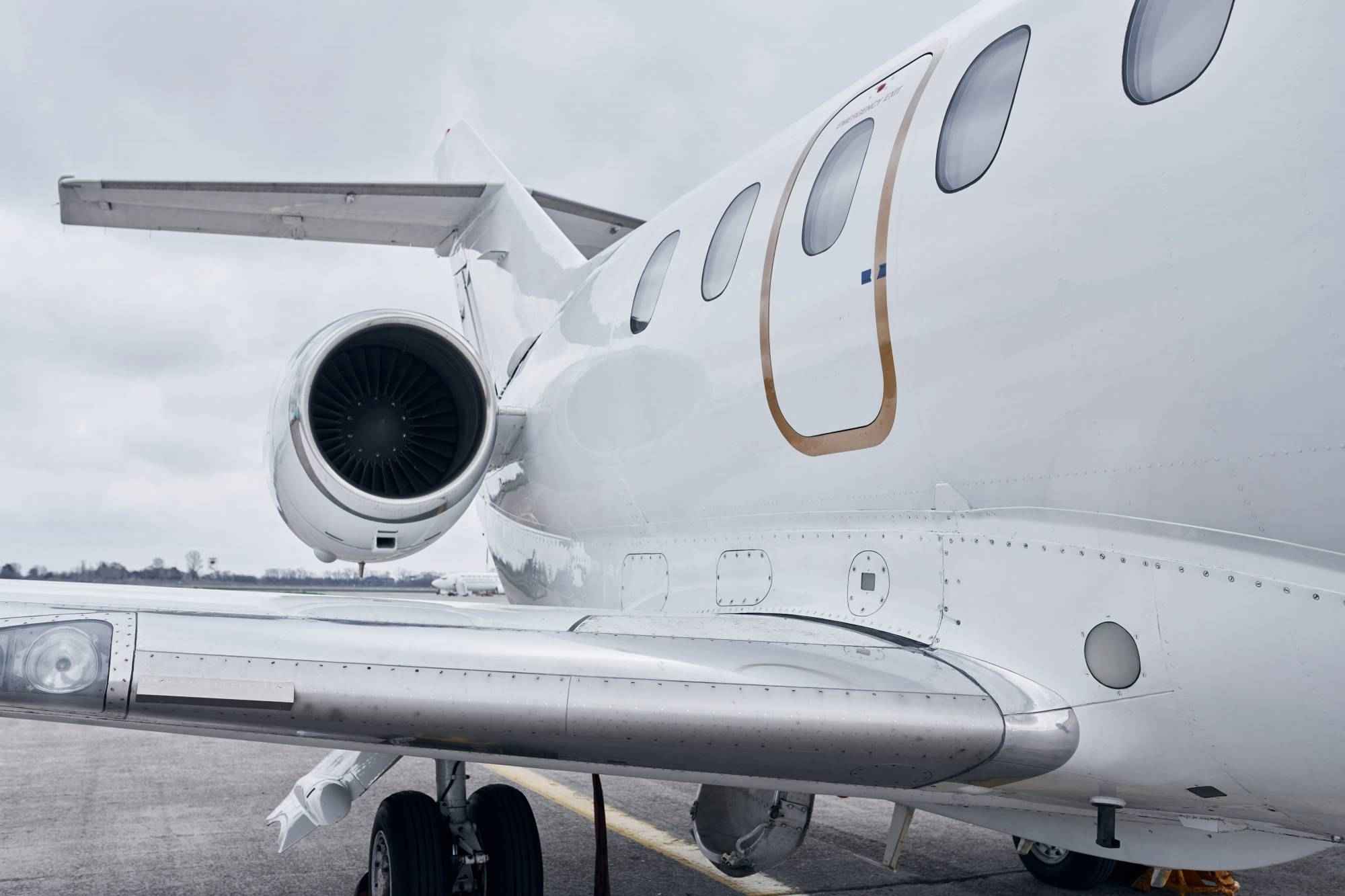
Private aviation faces constant criticism over its environmental footprint, and the numbers explain why. Private jets emitted an estimated 19.5 million tonnes of CO2 in 2023 alone, more than every flight departing Heathrow that year, and a private jet passenger can generate up to 14 times more CO2 than someone flying commercial on the same route, according to the International Council on Clean Transportation. Real technology is already changing that picture, though. In July 2026, Gulfstream flew a business jet entirely on sustainable aviation fuel at altitudes up to 50,000 feet, working with NASA and European researchers to measure the results. A new generation of engines is already certified and flying in real service, and a hydrogen powered business jet is now in development in France. None of this erases private aviation's footprint overnight, but it shows genuine progress rather than empty promises. Here is what is actually flying today, and what is coming next.
A full tank of sustainable fuel, tested at altitude
In July 2026, Gulfstream flew a G800 business jet on a full tank of 100 percent sustainable aviation fuel, not a blend, at altitudes up to 50,000 feet. The fuel was neat HEFA sustainable aviation fuel, made from waste fats and used cooking oil, and was tested against both conventional and low sulfur jet fuel for comparison. A second jet, a modified G700, flew alongside as an airborne laboratory, sampling the exhaust and measuring emissions in real time.
The flight was a genuine research effort, not a marketing exercise. Partners included NASA, the FAA, Germany's Aerospace Centre, Rolls-Royce, whose Pearl 700 engines powered both Gulfstream jets involved, and fuel supplier Montana Renewables. The result: sustainable fuel measurably reduced the particulate emissions that cause contrails to form. Contrails are one of aviation's biggest drivers of climate warming, so this shows fuel available today can already cut that impact. Rolls-Royce says sustainable fuel cuts net lifecycle CO2 by around 80 percent compared with conventional jet fuel, and that all its current production engines, across both commercial and business aviation, can already run on a 100 percent sustainable aviation fuel fill.
The catch is supply, not technology. Even though sustainable aviation fuel is proven to work at 100 percent concentration, most aircraft are currently only certified to fly on blends of up to 50 percent, and it still made up under 1 percent of global jet fuel supply in 2025, according to IATA. Under the EU's ReFuelEU Aviation rules, airports across the bloc must supply at least 2 percent sustainable aviation fuel from 2025, rising to 6 percent by 2030 and 70 percent by 2050, so availability should improve steadily over the next decade even if it remains limited today.
A new jet engine is already certified, already flying
Fuel is not the only advance. Pratt & Whitney Canada's PW812GA engine won certification from Transport Canada in 2022, FlightGlobal reports, and has already flown on Gulfstream's G400 since its very first flight in 2024, well ahead of the jet itself. The G400 is not yet certified or in service, but its engine already is: real technology, not a future promise.
The same PW800 engine family already powers Gulfstream's in-service G500 and G600 fleet, which recently passed 400 customer deliveries. Those sibling engines, the PW814GA and PW815GA, first ran in 2012 and were themselves certified back in 2015, so the family has almost a decade of real world service history behind it by the time the G400's own engine entered flight testing.
What is coming next: hydrogen power
Looking ahead, a French startup called Beyond Aero is developing the BYA-1, a hydrogen powered business jet that uses fuel cells producing only water vapour as exhaust. The aircraft is designed to seat up to 10 passengers, cruise at around 26,000 feet, and carry six hydrogen fuel cells generating a combined 2.4 megawatts at peak power to drive two electric ducted fans. Beyond Aero claims a cabin around 15 decibels quieter than a conventional jet, and operating costs roughly 55 percent lower than today's business jets.
In September 2026 the company partnered with Cote d'Azur's airport authority to study hydrogen refuelling infrastructure at Nice, Cannes Mandelieu, and Saint Tropez, per AIN Online. The Toulouse based company, a Y Combinator graduate that has raised 44 million dollars, already flew France's first manned hydrogen electric flight in 2024 using a modified prototype, and says it holds letters of intent for over 100 aircraft. The honest timeline is early next decade, so this is one to watch rather than book, but the investment is real.
GE Aerospace and its Italian arm, Avio Aero, are running their own hydrogen and hybrid electric engine tests in 2026, at the German Aerospace Center's propulsion facility in Lampoldshausen. Their programmes have completed a hydrogen engine restart test at simulated altitude, and validated a hybrid electric fuel cell system from idle through to maximum power, early but concrete steps toward the same goal Beyond Aero is chasing from a different angle.
Sources
- Rolls-Royce: Gulfstream and Rolls-Royce take sustainable aviation to new heights
- FlightGlobal: Transport Canada certificates Pratt's powerplant for Gulfstream's
- AIN Online: Beyond Aero and French airports prepare H2 flights
- GE Aerospace: Avio Aero and GE Aerospace complete Clean Aviation test milestones in Europe
- IATA: Fact sheet, sustainable aviation fuels
- ICCT: CO2 emissions from private jets
- ReFuelEU Aviation policy tracker
FAQ
Frequently asked questions.
Can I already charter a flight on sustainable aviation fuel?
Sustainable aviation fuel is available today and was used for Gulfstream's July 2026 test flight on a G800. Most aircraft are currently only certified to fly on blends of up to 50 percent, and supply remains limited, so availability depends on your operator and departure airport.
Is the Gulfstream G400 available to charter now?
Not yet. The G400 aircraft is not yet certified or in service, though its PW812GA engine is already certified and flying on test flights. Gulfstream's in-service G500 and G600, which use a related engine family with nearly a decade of service history, are already available.
What is a hydrogen powered business jet, and when will it fly?
Beyond Aero's BYA-1 uses fuel cells that produce only water vapour as exhaust instead of burning fuel, seats up to 10 passengers, and claims quieter cabins and lower operating costs than a conventional jet. The honest timeline for entry into service is early next decade, so it remains one to watch rather than book.
Do contrails really matter for climate warming?
Yes. Contrails are one of aviation's biggest drivers of climate warming, and Gulfstream's July 2026 test showed that sustainable aviation fuel measurably reduces the particulate emissions that cause them to form.
How big is private aviation's environmental footprint, really?
Private jets emitted an estimated 19.5 million tonnes of CO2 in 2023, and a private jet passenger can generate up to 14 times more CO2 per trip than someone flying the same route commercially. That is the scale of footprint the technology described here is working to reduce.
Is any of this just marketing, or is it genuine progress?
The July 2026 flight was a genuine research effort involving NASA, the FAA, and Germany's Aerospace Centre, not a marketing exercise. The engine certifications and hydrogen infrastructure partnerships described here are real, independently reported developments, not projections.