Blog
Private Jet vs First Class: Which Is Worth It? (2026)
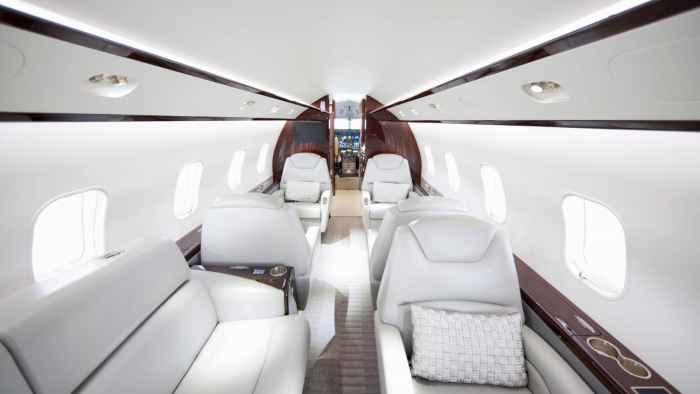
Private jet vs first class is not a question with one right answer. It depends on how many of you are flying, where you are going, and what your time is worth, and this guide works through the real numbers so you can see which one actually pays off on your route.
Private Jet vs First Class: At a Glance
Before getting into the detail, here is how the two options compare on the factors that usually decide the choice. The right answer changes depending on group size and route, which the sections below break down with real figures.
Cost: What You Actually Pay
The biggest structural difference between the two is what you are actually paying for. A first class ticket is priced per seat, so the airline sets one fare regardless of whether you are travelling alone or with colleagues. A private jet charter is priced per aircraft, per flight hour, which means the total cost is the same whether one person is on board or the cabin is full.
That difference matters more than it sounds. Approved Experiences reported American Airlines charging $18,606 (about €17,100) for a one-way first class ticket from Los Angeles to Paris, against $1,180 (about €1,090) for the same flight in economy. A solo traveller choosing that seat is comparing the airline's fare against the cost of chartering an aircraft outright, and for one person a scheduled first class seat is almost always the cheaper option.
The maths changes once more people are travelling. On a similar long-haul route, an Ultra Long Range Jet, the category built to fly transatlantic distances nonstop, costs roughly €12,000 to €18,000 per flight hour. Over an eleven-hour sector that puts the whole aircraft at around €132,000 to €198,000 one-way, for up to 10 to 14 passengers.
Prices are indicative and vary with availability, season, and positioning. Contact FastPrivateJet for a live quote.
That table shows the honest break-even point. For two or four passengers, buying first class seats is comfortably cheaper than chartering an aircraft of this size. Once a group grows to somewhere around eight to twelve passengers, which is exactly what an Ultra Long Range Jet is designed to carry, the total first class spend catches up with and then overtakes the charter price, and the private jet becomes the better value option as well as the more convenient one.
It is also worth being honest about a point most comparison articles skip: on short and medium-haul European routes, most airlines do not sell a first class cabin at all, only business class, so the real commercial comparison for a trip like London to Milan or Paris to Geneva is business class, not first class. Even against business class fares, Corporate Jet Investor puts it bluntly: chartering "costs a little more" than a premium commercial ticket, and it does not pretend otherwise.
That is not the whole story for a business traveller, though. The case for private jet charter on these routes rests less on ticket price and more on time, flexibility, and access, particularly for a traveller whose time carries real value to their business. Being able to choose your own departure time, skip the queues and long check-in windows of a commercial terminal, fly into an airport close to the meeting rather than the nearest major hub, or cover more than one city in a single day is worth a great deal to an executive or business owner on a tight schedule, and it is a benefit no ticket price alone captures. The next section sets out exactly how much time that adds up to and where it comes from.
Time: How Much Do You Actually Save Flying Private?
Time is where private jet charter usually wins outright. Research from the European Business Aviation Association found an average time saving of around 127 minutes per trip compared with a scheduled commercial flight, rising to more than 6.5 hours on multi-city itineraries.
The same research found travellers using Nice Côte d'Azur saved an average of 224 minutes compared with flying commercial, and documented a government delegation flying Brussels to Rome to Glasgow in a single day, saving around 11 hours against the equivalent scheduled routing, according to the same EBAA report.
Some of that saving comes from the airports themselves. Business aviation terminals sit closer to city centres than major commercial hubs, by as little as 13.8 kilometres in Paris and by as much as 46.3 kilometres in Milan, and passengers can typically arrive 15 to 30 minutes before departure rather than the two to three hours commercial first class still recommends for international check-in and security.
The rest comes from routing. Of the roughly 80,000 routes flown by business aviation each year, 91% had no direct commercial alternative at all, representing three quarters of all business aviation flights, EBAA found. A first class ticket only saves time if the airline actually flies where you need to go, on the day you need to go.
This is the multi-stop scenario Corporate Jet Investor uses to make the case for chartering: a single light jet can cover meetings in Amsterdam, Frankfurt and Milan in one day and still get an executive home that night, an itinerary that simply is not realistic on scheduled commercial flights, first class or not.
Privacy and Flexibility
A first class cabin still shares the aircraft with everyone else on the flight, including boarding, security, and the fixed departure time on the ticket. A private jet charter removes all three: you choose the departure time, you can hold or adjust it if a meeting overruns, and the only people on board are the ones you invited.
That control matters most for confidential business discussions, sensitive personal travel, or simply not wanting a schedule change on the ground to cost you the trip. It is a genuine advantage of chartering, but it is a convenience benefit rather than a cost saving, and it is worth being clear about which one you are actually paying for.
Comfort, Space and Baggage
A first class seat, especially on a modern long-haul aircraft, is a genuinely comfortable way to fly, often with a fully flat bed, direct aisle access, and dedicated cabin crew. Private jet cabins vary far more by aircraft category: a Very Light Jet seats four to six people in a cabin that does not allow standing, while a Midsize Jet or larger typically has a stand-up cabin, a private lavatory, and room to work or sleep properly across a full group rather than one seat at a time.
Baggage is one area where private jet charter can actually be more restrictive than it looks. Cabin space, not a printed allowance, is the real limit, so ski equipment, golf bags, or several oversized cases can fill a smaller aircraft faster than passenger count alone would suggest. It is worth confirming baggage space for your specific trip before booking rather than assuming a private jet always has more room than an airline's hold.
Pets are the other side of that coin. Most charter operators allow pets to travel in the cabin with their owners at no extra formality, while commercial first class typically still requires pets to travel in the hold, and some airlines and routes exclude them altogether.
Safety and Regulation
Both options are regulated commercial flying, not a trade-off between a certified airline and an unregulated alternative. Charter operators in Europe must hold an Air Operator Certificate issued by their national aviation authority, the same category of oversight that governs the airline flying the first class cabin, as the European Business Aviation Association explains.
The practical difference is due diligence. An airline's certification is fixed and public, while a charter booking can involve different operators and aircraft trip to trip, so it is worth asking your broker to confirm the operator's certificate and safety rating before you fly rather than assuming every charter option is equivalent.
The Environmental Trade-off
This is a point worth stating plainly rather than glossing over: a private jet typically produces more carbon dioxide per passenger than a first class seat on a commercial flight, simply because the emissions of one aircraft are spread across a handful of passengers instead of a full cabin. Flying fewer people further in a smaller aircraft is not the more efficient option on a per-passenger basis, whichever cabin you would otherwise book.
Sustainable aviation fuel and carbon offsetting can reduce the footprint of a charter flight, and operators increasingly offer both, but neither eliminates the gap entirely today. If environmental impact is a significant factor in your decision, it is worth asking your broker directly what SAF availability and offsetting options exist for your specific route and aircraft.
Private Jet vs First Class: The Honest Verdict
For a business traveller whose time genuinely carries a high value, which describes most executives, entrepreneurs, and senior decision makers, private jet charter is very often the better choice even on a short route and even flying alone, once the cost of that time is counted rather than ignored. A saved afternoon, a meeting that would otherwise be missed, or a same-day return that no scheduled timetable allows can be worth far more than the price difference shown in the tables above, and that is where private jet charter earns its keep for this audience.
For one or two people flying a major long-haul route where a strong first class product exists, and where ticket price is the only thing being weighed, first class is usually the more rational financial choice, and the comfort gap between the two has narrowed considerably on modern wide-body aircraft. There is no honest way to argue otherwise on price alone.
For groups of four or more, multi-stop days, destinations without a convenient direct commercial service, or trips where the schedule genuinely cannot move, the calculation flips. The total cost of first class seats for the whole group closes in on the charter price, and the time and routing advantages documented above start to outweigh whatever premium remains.
As Corporate Jet Investor puts it, chartering rarely comes out cheaper than a premium commercial ticket for a single traveller, and pretending otherwise does nobody any favours. The honest case for private jet charter is time, access, and control, not a lower sticker price, and it is strongest exactly where those things matter most: groups, tight schedules, and routes commercial aviation does not serve well.
If you want an honest comparison for your specific route and group size, the FastPrivateJet team can give you a live quote alongside the equivalent first class fare, with no obligation.
Sources
- The Socio-economic Benefits of Business Aviation in Europe - European Business Aviation Association / Oxford Economics
- About Business Aviation - European Business Aviation Association
- Why Business Jets Make Sense - Corporate Jet Investor
- 10 Reasons Not to Buy a Private Jet - Corporate Jet Investor
- First Class Ticket Prices: Your 2026 Guide - Approved Experiences
FAQ
Frequently asked questions.
Is a private jet actually more expensive than first class?
For one or two passengers, yes, a private jet charter is usually more expensive than a first class ticket on the same route. For groups of around eight or more on a long-haul route, the total cost of first class seats can catch up with or exceed the price of chartering the whole aircraft.
Is a private jet worth it for a single business traveller?
On ticket price alone, no, a scheduled business or first class seat is almost always cheaper for one person. Once the value of that traveller's time is counted, including a saved afternoon, a same-day return, or a meeting that a scheduled timetable simply cannot fit, private jet charter often becomes the more rational choice.
How much time do you save flying private instead of first class?
Research from the European Business Aviation Association found an average saving of around 127 minutes per trip compared with commercial flying, rising to over 6.5 hours on multi-city itineraries.
Can you fly with pets on a private jet?
Most private jet charter operators allow pets to travel in the cabin with their owners, with no crate or hold requirement in most cases. Commercial first class typically requires pets to travel in the hold, and some airlines and routes do not accept them at all.
Do European airlines offer first class on short-haul routes?
Most European airlines do not sell a first class cabin on short and medium-haul routes, only business class. The realistic commercial comparison for a route like London to Nice or Paris to Milan is business class, not first class.
Is it cheaper to charter a private jet for a group than book first class seats?
It can be. Because a charter is priced per aircraft rather than per seat, the total cost stays the same whether two people or ten are travelling, so larger groups on long-haul routes often reach a point where chartering costs about the same as, or less than, buying that many first class tickets.
Is flying private less safe than flying first class on a commercial airline?
No. Both are regulated commercial flying. Charter operators in Europe must hold an Air Operator Certificate from their national aviation authority, the same category of oversight that applies to the airline operating the first class cabin, as the European Business Aviation Association explains.