Blog
Flying Private With Pets: Costs, Rules & What to Expect
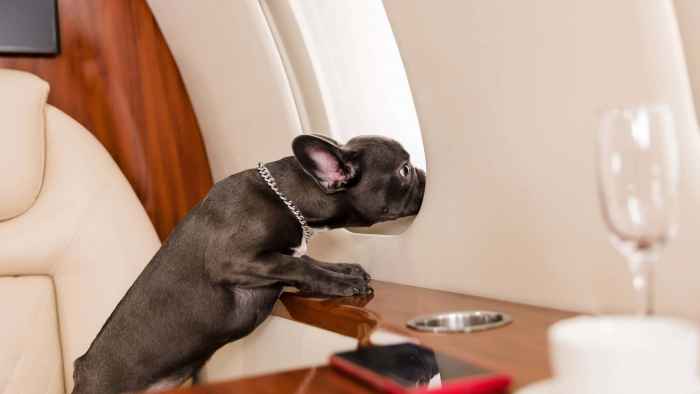
Flying private with pets is one of the more straightforward parts of chartering a jet, but it still comes with real costs, documents, and rules worth knowing before you book. This guide covers what operators actually charge, the paperwork required for travel within Europe, and what to expect once you and your pet are on board. None of it requires the preparation a commercial flight with an animal usually does.
What It Costs to Fly Private With a Pet
Most private jet operators do not charge a dedicated pet fee at all. Forbes has reported that most operators carry pets at no extra charge, and that even charter brokers without a fixed pet policy find that most of their operators do not add one either. The owner remains responsible for the cost of any cleaning or damage the pet causes, but that is a contingency, not a standard line item on the invoice.
Figures are indicative and converted from USD reporting. Contact FastPrivateJet for a live quote covering your pet and your route.
The real cost difference is not the pet fee, since that is usually zero either way, it is the price of the aircraft itself. Chartering privately to avoid a commercial pet fee only makes financial sense if you were already planning to fly private for other reasons, such as group size, schedule, or route.
The Documents and Rules for Flying With a Pet in Europe
For travel within the EU, the European Commission requires a pet to be microchipped before it is vaccinated against rabies, with the vaccination itself given no earlier than 12 weeks of age. Immunity is not considered valid until 21 days after the vaccination is complete, so this is not something to arrange the week before a trip. An EU pet passport, issued by an authorised vet, then records the microchip number and the vaccination details and travels with the pet.
Dogs travelling to Ireland, Finland, Malta, Northern Ireland, or Norway also need a tapeworm treatment, administered by a vet between 24 and 120 hours before arrival and recorded in the passport, according to the European Commission. This requirement does not apply to cats or ferrets, and does not apply to travel between other EU countries. Check the specific rules for your destination well before departure, since a missed vaccination window or tapeworm treatment can delay a trip regardless of how flexible your aircraft's schedule is.
What to Expect Once You Are on Board
Most operators allow a pet to travel in the cabin at the owner's feet or on a seat, rather than in a crate in the hold, which is the main practical difference from flying commercial. The cabin is also pressurised and temperature-controlled throughout the flight in the same way it is for passengers, unlike a commercial cargo hold, which is a meaningful difference for older pets or breeds sensitive to heat and pressure changes.
Some aircraft carry pet-specific amenities such as a water bowl or a designated rest area, though this varies by operator and is worth asking about when you request your quote rather than assuming it is standard. On a longer flight with a fuel stop, ask whether there is time and a suitable area for the pet to be walked, since this is easier to arrange on a private itinerary than a scheduled one but still needs to be planned rather than assumed.
Bring your pet's usual food, any medication, and something familiar like a blanket or a toy, since a private cabin does not eliminate the stress some animals feel from travel, even if it removes the noise and crowding of a commercial terminal. Tell your broker about your pet, including size, breed, and temperament, when you first request a quote, so they can confirm the aircraft and crew are a good fit rather than finding out on the day.
Multiple Pets and Less Common Animals
Private charter is generally far more flexible than commercial travel when it comes to what kind of animal, and how many, can fly. Dogs and cats are the most common, but many operators will also accept rabbits, birds, and reptiles with enough notice, and a group of pets travelling together is rarely a problem if the cabin has the space.
The documents required still depend on the destination and the species, and the EU rules on microchips, vaccination, and tapeworm treatment described above apply specifically to dogs, cats, and ferrets rather than every animal. For anything outside those three species, or for a working or emotional support animal, confirm the specific requirements for your route with your broker well before departure rather than assuming the same rules apply.
Sources
- Travelling with a Pet within the EU - European Commission
- What Does It Cost To Fly Your Pet On A Private Jet? - Forbes
FAQ
Frequently asked questions.
Do private jets charge extra for pets?
Most operators do not charge a dedicated pet fee, though the owner is liable for any cleaning or damage costs the pet causes. This is different from commercial airlines, which typically charge a fee for both in-cabin and cargo-hold pet travel.
What documents does my pet need to fly to Europe?
Your pet needs a microchip, a rabies vaccination given no earlier than 12 weeks of age with at least 21 days of validity before travel, and an EU pet passport recording both. Dogs travelling to Ireland, Finland, Malta, Northern Ireland, or Norway also need a tapeworm treatment within 24 to 120 hours of arrival.
Can my pet sit with me in the cabin on a private jet?
Yes, most operators allow pets to travel in the cabin at the owner's feet or on a seat rather than in a crate in the hold. Confirm this and any pet-specific amenities with your broker when you request your quote, since policies vary by operator.
Are there breed or size restrictions for pets on private jets?
Restrictions are generally far more relaxed than on commercial airlines, and most operators do not apply breed bans. Always confirm your specific pet's size and breed with your broker before booking, since individual aircraft and operators can still have their own limits.
How far in advance should I prepare my pet's travel documents?
Start at least a month before departure, since the rabies vaccination requires 21 days to become valid and must be given after the microchip and no earlier than 12 weeks of age. Leaving it later risks a delayed trip regardless of how flexible your charter's schedule is.